The National Center for Forensic Science (NCFS) is a State of Florida Type II Research Center at the University of Central Florida. Our mission is to provide relevant and responsive forensic science research, training and operational support to communities that rely on science to achieve justice. Our team of chemists, biochemists, physicists and statisticians work individually and in synergistic teams to perform basic and applied forensic science research. The Center also develops and curates databases and provides continuing education in support of the forensic communities.
New Publication
Detection and quantification of trace technetium in the presence of
molybdenum using laser-induced breakdown spectroscopy
Journal of Analytical Atomic Spectrometry 41 (2026)
Hunter B. Andrews, Zachary Murphy, Mauro Martinez, John Lucchi, Vasileios Anagnostopoulos and Matthieu Baudelet
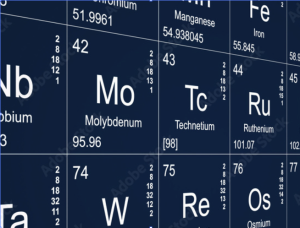
Technetium (Tc) is a very important element that is encountered in many aspects, from its presence in radioactive waste and its potential environmental impact to its use as a medical radioisotope. Its detection and quantification in liquid samples is traditionally cumbersome, involving detailed sample preparation and analysis by mass spectrometry or scintillation. This article demonstrates the first comprehensive emission spectral analysis of Tc from a liquid sample by immobilization in a polymer and analysis by laser-induced breakdown spectroscopy (LIBS). A survey of LIBS spectra was completed to identify the strongest analytical lines for quantification of trace Tc in the presence of Mo. The quantification of Tc in a Mo-containing matrix was selected because Tc radioisotopes are the daughter products of Mo isotope decay. The first reported calibration curves by LIBS are provided with limits of detection and quantification down to 0.710 µg mL−1 and 1.39 µg mL−1, respectively. Ultimately, this study demonstrated the feasibility of trace Tc quantification using LIBS and will serve as a reference for future research related to monitoring this radioactive species.